When it comes to securing your financial future, most people in India end up comparing two very different options — RPLI and mutual funds. One comes with the backing of the government and a guaranteed promise, the other rides the market wave and offers the chance of higher growth. Both have their place, but they are built for very different kinds of people.
In this article, we have provided each and every detail properly so you can figure out that which among of both actually makes sense for your situation.
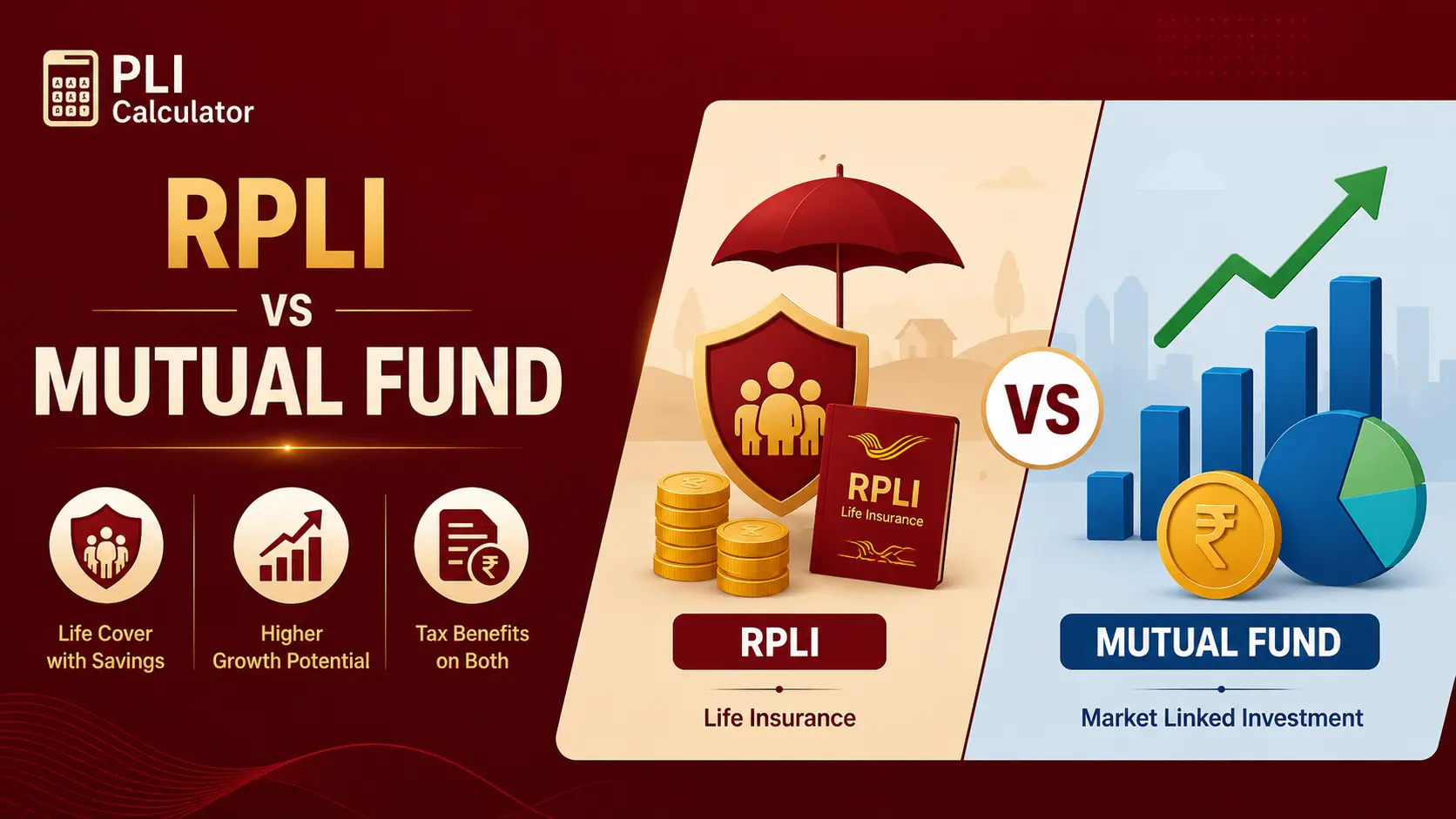
What Is RPLI and How Does It Work
Rural Postal Life Insurance, commonly known as RPLI, was launched by the Indian government to bring affordable life insurance to people in rural areas. It runs under the Department of Posts and combines life protection with a savings component — all at premium rates that are significantly lower than most private insurers.
RPLI Policy Details You Should Know
RPLI is not available to everyone. It is designed specifically for rural residents and certain government employees. The scheme comes in a few different plan types:
- Whole Life Assurance — known as Gram Suraksha
- Endowment Assurance — known as Gram Santosh
- Money Back Plans — for those who want periodic payouts
📖 Read More Related Blog
🏦 RPLI vs LIC: Which Is Better?Premiums, bonus & benefits — detailed comparison →
Core Details
- Eligibility: Rural residents of India up to 55 years of age
- Sum Assured: Ranges from ₹10,000 to ₹10 lakh
- Premium Rates: Lower than private insurers
- Bonus: Annual bonuses declared by the government are added to the policy
- Loan Facility: You can take a loan against the policy after 3 to 4 years
One thing that genuinely helps policyholders is the RPLI Calculator available on the India Post website. You just enter your age, the sum assured you want, and the policy term — and it gives you a clear picture of your estimated maturity amount, monthly premium, and how much bonus you would accumulate over the years. It is simple, free to use, and quite handy if you want to plan ahead before committing to a plan.
How Mutual Funds Work
Mutual funds pool money from thousands of investors and put it into a mix of stocks, bonds, or both — depending on the type of fund. A professional fund manager handles where the money goes, and your returns are tied to how well the market performs.
A few things you should understand clearly:
- Returns are not guaranteed, they move with the market
- They are managed by SEBI-registered Asset Management Companies (AMCs)
- You can invest through a lump sum or a Systematic Investment Plan (SIP)
- Most open-ended funds allow withdrawal within 1 to 3 business days
- Tax treatment varies based on the type of fund and how long you stay invested
Equity mutual funds have historically delivered somewhere between 10% to 14% annualised returns over long periods. That said, past performance does not promise the same in the future. Debt funds are more stable but still carry some interest rate risk.
RPLI vs Mutual Fund Comparison
This is where things get interesting. On the surface, both can help you build wealth — but they work on completely different logic.
Risk and Returns
RPLI gives you fixed, predictable returns. There is no market exposure at all, which makes it a comfortable choice for people who cannot afford to take risks with their money. Mutual funds, on the other hand, carry market risk — but the growth potential over 10 to 15 years is significantly higher, especially with equity funds.
If you are the type who loses sleep during a market correction, RPLI’s stability will probably suit you better. But if you can stay patient and let your money grow over time, mutual funds tend to reward that mindset quite well.
📖 Read More Related Blog
📋 RPLI vs PLI: Eligibility, Benefits & Key Differences ExplainedWho can apply & how RPLI differs from PLI →
Insurance Coverage
This is a big difference that most people overlook. RPLI combines life insurance with savings. If the policyholder passes away during the policy term, the nominee receives the sum assured along with all the bonuses accumulated up to that point.
Mutual funds offer zero life cover. None. So if you are using mutual funds as your primary financial product, you need a separate term insurance plan running alongside — which many financial advisors recommend anyway.
Liquidity
Mutual funds clearly win here. Most open-ended mutual funds let you withdraw your money at any time, though there may be a small exit load if you pull out too early. RPLI has a lock-in period, and surrendering your policy before maturity means you lose a good chunk of the benefit.
Tax Benefits
Both options have some tax advantages, but the structure is different:
- RPLI: Premiums qualify for deduction under Section 80C, and maturity proceeds are tax-free under Section 10(10D)
- Mutual Funds: ELSS funds also qualify for Section 80C deduction; equity fund gains above ₹1 lakh are taxed at 10% as LTCG
RPLI has the edge when it comes to tax-free maturity, since you know exactly what you will get and there are no surprises.
RPLI vs Mutual Fund Which Is Better
Honestly, there is no one-size-fits-all answer here. It really comes down to who you are and what you need your money to do.
For rural investors who may not have access to professional financial advice or AMC offices, RPLI makes a lot of practical sense. The post office network is present even in areas where banks rarely reach, which makes RPLI genuinely accessible.
For salaried individuals in urban or semi-urban areas who already have a term plan, mutual funds — particularly index funds or diversified equity funds — often make more financial sense for building serious long-term wealth.
Using Both Together Is Actually a Smart Move
If you want the best of both worlds, combining RPLI and mutual funds is a completely reasonable strategy. A small RPLI policy covers your life and gives you guaranteed savings, while a monthly SIP in a mutual fund builds your wealth over time. Together, they cover protection and growth without making your financial plan unnecessarily complicated.
📖 Read More Related Blog
⚖️ RPLI vs RD Comparison 2026: Returns, Tax Benefits & Risk ExplainedRPLI vs RD comparison 2026 explained in detail. Check returns, safety, tax savings, liquidity →