Rural Postal Life Insurance, commonly known as RPLI, is a life insurance scheme run by India Post, specifically designed for people living in rural areas. It was introduced in 1995 to extend insurance coverage to a population that largely remained outside the reach of private insurers. Over the decades, it has served millions of policyholders across villages and small towns.
In 2026, with more insurance options available than ever before, many people are asking whether RPLI worth buying 2026 still holds up against newer alternatives. This article breaks down everything you need to know — without sugarcoating anything.
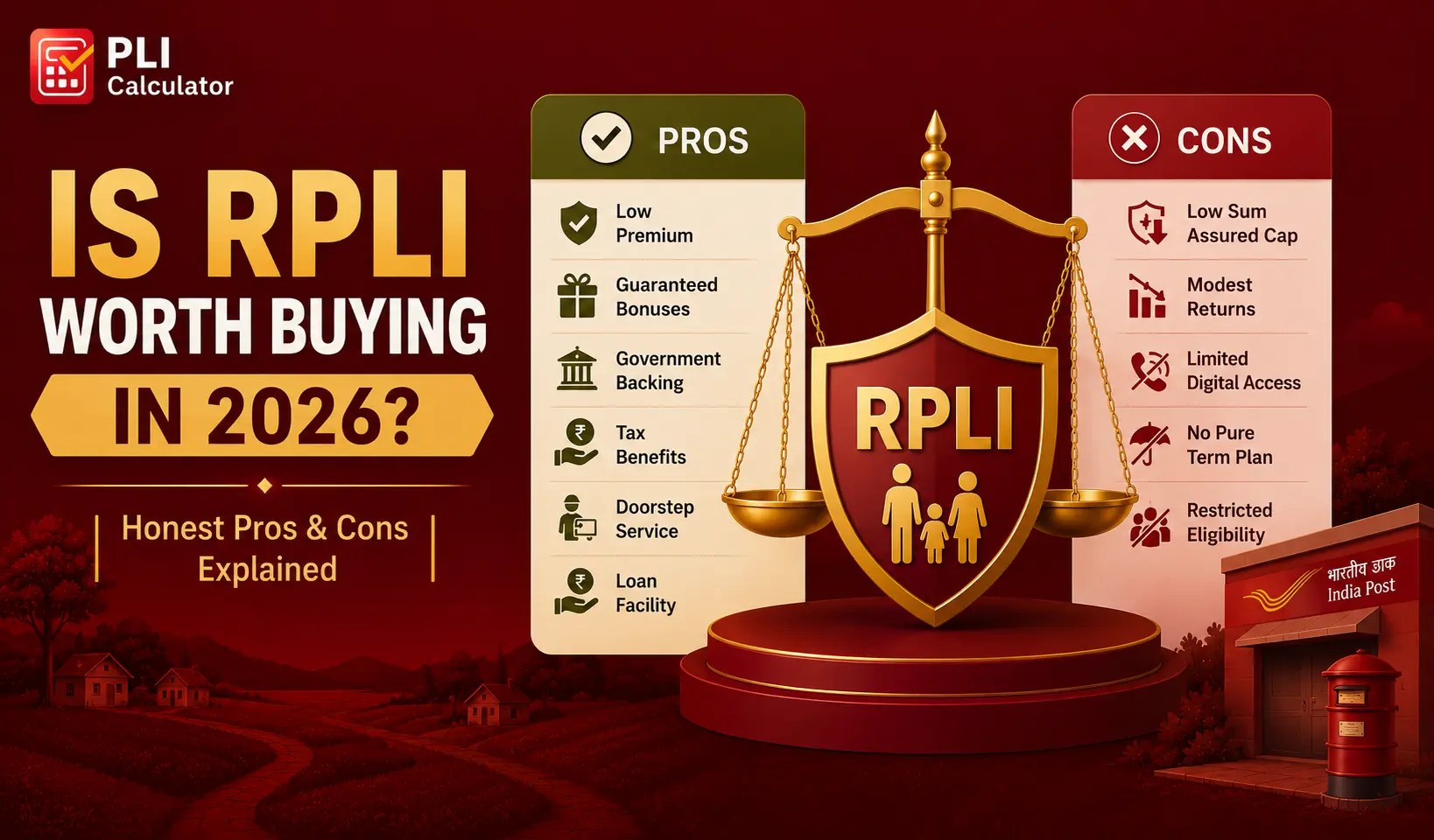
What Is RPLI and Who Is It For?
RPLI is managed by the Department of Posts under the Government of India. It targets residents of rural areas, including people from economically weaker sections, farmers, laborers, and self-employed individuals who may not have access to private life insurance products.
Eligibility is simple. Anyone between 19 and 55 years of age living in a rural area can apply. The sum assured ranges from ₹10,000 to ₹10 lakh depending on the plan chosen.
Types of RPLI Plans Available
RPLI offers several plan variants to suit different financial goals:
- Gram Suraksha – A whole life assurance plan
- Gram Santosh – An endowment assurance plan
- Gram Suvidha – A convertible whole life plan
- Gram Priya – A money-back plan
- Gram Sumangal – Another money-back variant for shorter terms
- Bal Jeevan Bima – A children’s life insurance plan
Each plan has its own maturity structure, bonus rates, and premium schedules.
📖 Read More Related Blog
⚖️ All 6 RPLI Plans Compared: Which Life Insurance Policy is Best for You in 2026?RPLI Plans Comparison explained in detail. Explore features, returns, premium costs, bonus rates →
RPLI Pros and Cons: An Honest Look
Understanding RPLI pros and cons properly requires looking at both sides without bias. Here is what actually matters.
The Real Advantages
📖 Read More Related Blog
⚖️ RPLI Policy Details Explained: Features, Bonus, Premium & BenefitsRPLI Policy Details explained in detail. Learn about features, bonus rates, premium calculation →
The Real Disadvantages
The maximum coverage is ₹10 lakh. For anyone with dependents, financial liabilities, or income replacement needs, this amount falls significantly short of adequate life cover in 2026.
While the bonus additions are consistent, the overall returns do not compete with mutual funds, PPF, or even some modern ULIPs. If wealth creation is the goal, RPLI is not the right vehicle.
Private insurers now offer seamless app-based policy management, instant claim processing, and digital renewals. RPLI’s digital infrastructure still lags behind, which can be frustrating for younger policyholders.
RPLI does not offer a standalone term insurance plan with a high sum assured at low cost. This limits its utility as a primary life cover for breadwinners with growing families.
Urban residents and government employees already covered under PLI (Postal Life Insurance) are not eligible for RPLI. This narrows its applicable audience.
Is RPLI a Good Investment in 2026?
Calling it purely an investment might set the wrong expectations. Is RPLI a good investment depends entirely on what you need from it. If you are a rural resident looking for affordable life cover with tax benefits and the assurance of government backing, RPLI serves that purpose reliably.
The low premiums and guaranteed bonuses make it a decent savings-cum-insurance tool for people who do not have access to sophisticated financial products. However, if you are looking for high returns, large coverage, or flexible investment options, RPLI will leave you wanting more. In that case, combining a term insurance plan with a separate investment instrument like a mutual fund or PPF makes more practical sense.
Should You Buy RPLI in 2026?
You want a low-risk, government-backed savings plan
You need basic tax-saving instruments under 80C
You are comfortable with modest but guaranteed returns
You need a sum assured above ₹10 lakh
You want market-linked growth or high returns
You already have adequate life cover through other means
You prefer fully digital policy management
RPLI benefits in 2026 remain relevant for its core audience. But blindly buying it without comparing alternatives would be a mistake.
📖 Read More Related Blog
⚖️ How to Surrender Your RPLI Policy — Rules, Penalties, and What You Will Get BackWant to know about RPLI Policy Surrender? Check surrender value, refund process, policy rules, penalties →