Rural Life Insurance, commonly known as RPLI, was introduced by India Post in 1995 specifically to extend life insurance coverage to people living in rural areas. It operates under the Department of Posts and remains one of the most affordable insurance options available in the country.
Over the years, RPLI has expanded its offerings to cover different financial needs and life stages. There are now six distinct policies under this scheme, each designed with a specific purpose in mind. Understanding the difference between them is essential before committing to one.
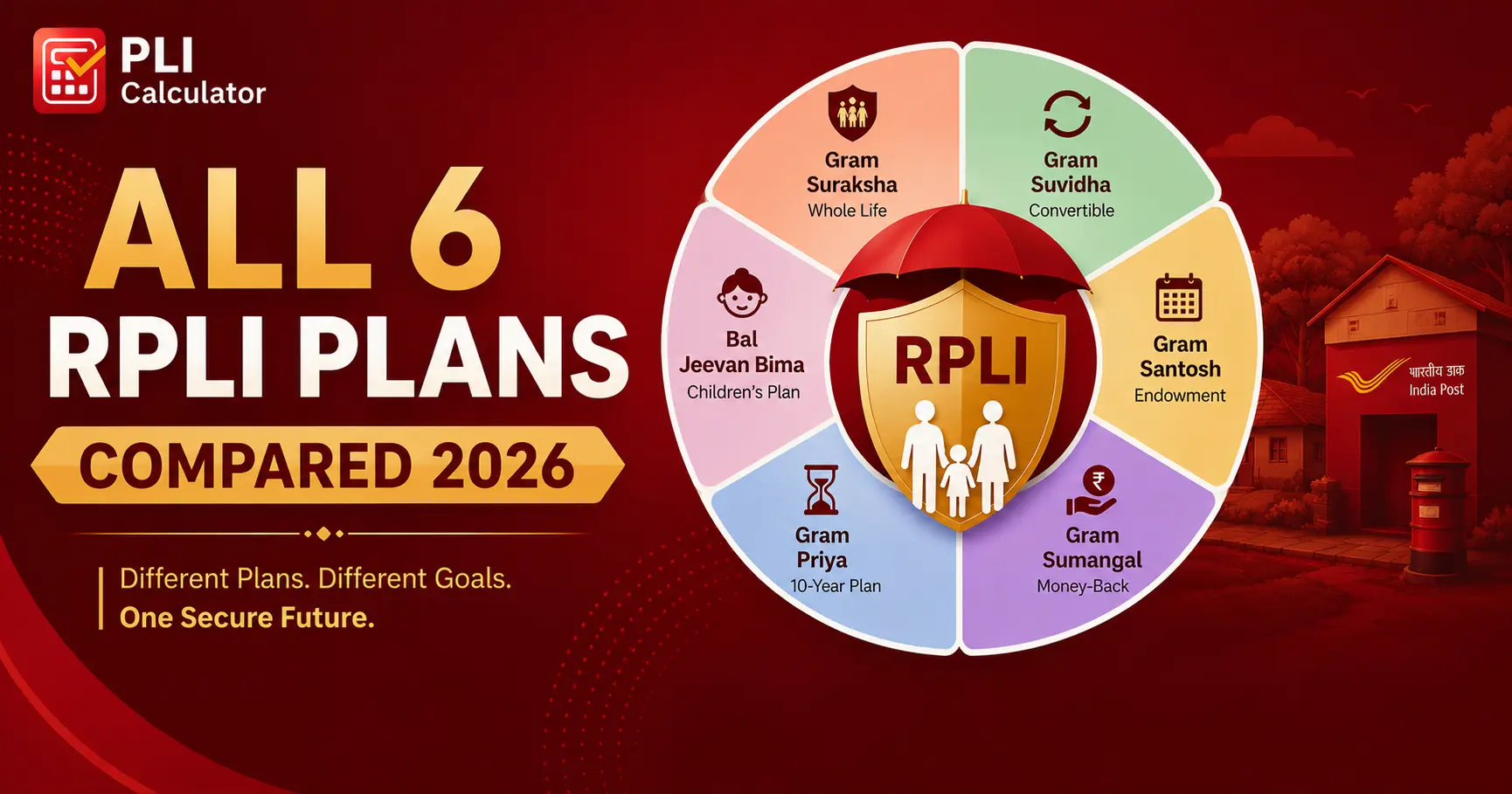
The 6 RPLI Policies at a Glance
The 6 types of RPLI policies available today are discussed below. Each plan serves a different purpose, premium structure, and maturity benefit. Let us go through each one clearly.
1. Gram Suraksha – Whole Life Assurance
The minimum sum assured is ₹10,000 and the maximum goes up to ₹10 lakh. It also earns bonuses, which increases the final payout significantly over time.
2. Gram Suvidha – Convertible Whole Life Assurance
If you are unsure about your long-term financial goals right now, this plan gives you breathing room. The conversion option makes it attractive for younger buyers who want to reassess later.
3. Gram Santosh – Endowment Assurance
Policy terms range from 5 to 20 years, and the entry age can be anywhere between 19 and 55 years. It works well for those who want both insurance coverage and a lump sum at a fixed date — for instance, planning for a child’s education or a retirement corpus.
📖 Read More Related Blog
⚖️ RPLI Policy Details Explained: Features, Bonus, Premium & BenefitsRPLI Policy Details explained in detail. Learn about features, bonus rates, premium calculation →
4. Gram Sumangal – Anticipated Endowment Assurance
Payouts are made at fixed intervals such as after completing certain years, with the final balance paid at maturity. Death coverage remains active throughout the term.
5. Gram Priya – 10-Year Rural PLI
This is a practical choice for someone who wants a time-bound savings-cum-insurance product without a long commitment. The shorter term means faster results and less uncertainty.
6. Bal Jeevan Bima – Children Policy
Coverage is available for children between 5 and 20 years of age. No premium is charged if the parent passes away during the term, and the sum assured is still paid at maturity. It is a thoughtful addition to the RPLI family for parents thinking ahead.
RPLI Plans Comparison Table
| Policy Name | Type | Best For | Payout Structure |
|---|---|---|---|
| Gram Suraksha | Whole Life | Long-term family protection | On death or maturity |
| Gram Suvidha | Convertible | Flexible planning | Convertible after 5 years |
| Gram Santosh | Endowment | Fixed goal savings | Lump sum at term end |
| Gram Sumangal | Money-Back | Periodic income needs | Staggered + final payout |
| Gram Priya | Short Endowment | 10-year savings goal | Lump sum at 10 years |
| Bal Jeevan Bima | Children’s Plan | Child financial security | At maturity or on death |
This RPLI plans comparison helps clarify which plan aligns with specific life situations rather than choosing randomly.
📖 Read More Related Blog
⚖️ Is RPLI Worth Buying in 2026? Honest Pros and Cons ExplainedRPLI Worth Buying 2026? Explore honest pros and cons, returns, bonus benefits, premium costs →
Which RPLI Plan is Best in 2026?
The answer depends entirely on what you need from your policy.
- If family protection is the priority, Gram Suraksha offers long-duration coverage at low premiums.
- If you need a defined savings goal, Gram Santosh is reliable and well-structured.
- For regular payouts, Gram Sumangal works like a money-back policy without the complexity.
- For a short-term plan, Gram Priya finishes in 10 years and returns decent value.
- For children’s future security, Bal Jeevan Bima is straightforward and parent-friendly.
When thinking about the best RPLI policy 2026, most financial advisors point to Gram Santosh for salaried rural workers due to its balance of coverage, savings, and predictability. However, self-employed individuals or farmers with irregular income may prefer Gram Sumangal’s periodic payout structure.
The question of which RPLI plan is best does not have a universal answer, but it becomes clear once you map your income pattern, dependents, and financial goals to the right product.
How to Apply for an RPLI Policy
Applications can be submitted at any post office branch across India. You will need standard KYC documents — Aadhaar, age proof, and address proof. Medical examination may be required depending on the sum assured and age.
Premium payments can be made monthly, quarterly, half-yearly, or annually. Online payment options are also now available through India Post’s portal.
📖 Read More Related Blog
⚖️ How to Surrender Your RPLI Policy — Rules, Penalties, and What You Will Get BackWant to know about RPLI Policy Surrender? Check surrender value, refund process, policy rules, penalties →